


Business Transformation: Organizing Chaos | January 2026 Expert Insights Webinar

Business Transformation: Organizing Chaos

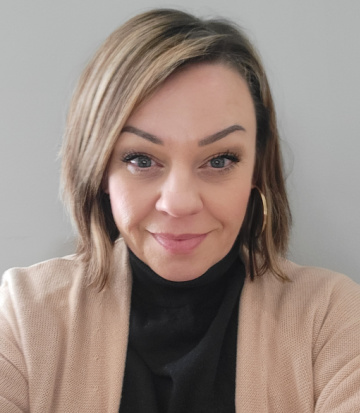
Presenter: Mandy Spiess

Date and Time: January 21st, 2026, 12 noon – 1 pm

Registration Closes: January 20, 2025, 11:59 pm

Audience: ALL

  • Managers, team leaders, and HR professionals
  • Project Managers, Program Managers, Business Analysts
  • C-Suite
  • Business and enterprise architects
  • Employees seeking career development opportunities
Description:
This webinar will explain why business transformation has become a common requirement for many organizations, but can often be chaotic and unpredictable.  This webinar will offer some practical tips and techniques, such as business architecture, to help plan for the unexpected.

Take-aways:
  • Understanding the need for business transformation
  • Putting a plan together for business transformation
  • Identifying, anticipating, and responding to risks and common challenges

REGISTER HERE

This field is for validation purposes and should be left unchanged.
Name

More About the Presenter:

Mandy Spiess

More Information on Presenter

Read More

The Hidden Work of Supervisors When a Team Member Departs | A Workplace Blog

My new laptop does not like my old docking station.  Even routine changes — like a new laptop or timesheet system — can derail a day. Supervisors often overlook these routine changes, but for team members, these transitions need to be managed.

As supervisors, we focus on honoring valuable departing employees. Many times, there is build up to their “last day.”  Collecting equipment, transferring files, and conducting exit interviews all focus on the departing employee. The departure is viewed as a routine process, with the departing employee getting the spotlight rather than as a time of transition to support those employees who are remaining and doing the work.

For your team, it is an impactful transition because leaving your team is more than just an emotional moment. One easy tool you can use to manage this transition for your team is the Elements of Successful Change.

Vision

Will the position be replaced?  How will the work get done during the short (or long) term?  Are there more departures coming?  Help your team see the future vision by providing them with the information they need to process the departure.


Skills

Does anyone on your team need new skills?  If someone is taking over the work, are they already cross-trained?  Does that need to happen before the departure?  Help remaining team members maintain productivity by ensuring they know how to do the work.


Resources

Do your team members need access to additional software programs?  Does a team member need more time to complete work while they learn a new skill? Does a team member need a schedule or shift change? Help your team avoid obstacles and frustration by getting them what they need.


Action Plan

Do you have a transition timeline in place?  Have you shared that timeline and milestones with your team? Help your team see the endgame by letting them know what part they’ll play.


Incentives

Obvious incentives are bonus pay and overtime or promotion; however, many times those are not options, so ask yourself what the WIIFM* is for each of your team members?  How can you ensure that you are using the correct motivation for each team member? Help your team members see value and purpose in their changing work.

*What’s In It for Me?

While some supervisors may say, “Hey, people leaving is just part of work; figure it out,” I say take 15 minutes to map out how your team will navigate an upcoming departure; it’s a small investment from you that pays dividends with your team by reducing frustration, minimizing disruption, and preventing additional departures.

Side bar or footnote?   The Elements of Successful Change is just one tool you will learn in Leading Teams through Change.  IPD offers this course through individual registration or for a group of supervisors at your organization.

Read More

Be Routine to be Innovative | Past Expert Insights Webinar

Be Routine to Be Innovative

Presenter: Beth Schaefer

Audience: ALL

  • Managers, team leaders, and HR professionals
  • Mentors and mentees from all generations
  • Organizations interested in enhancing workplace culture and collaboration
  • Employees seeking career development opportunities

Innovation is one of the current buzzwords for business trends.  Be collaborative, be adaptive, and be innovative.  But, who has time to be innovative when we are all doing more with less?  One of the keys to innovation is to turn up the routineness of your job.  Attend this free Expert Insights session to hear why and get an early start on tools to organize your work in the new year.

Take-aways:
  • Understand how being routine can enhance your innovation
  • See and share examples of time management tools to foster routine

More About the Presenter:

Beth Schaefer

More Information on Presenter

Read More

It’s Thanksgiving: Do the Butterfly (Not the Turtle) | A Workplace Blog

Have you ever had a friend or coworker who was going through a difficult time?  Maybe they had a life or work situation going awry, or maybe they just felt down, and could not really pinpoint why.

And, you wanted to help.

One of our first (and, not necessarily wrong) impulses is to spoil that person.  You bring them a gift or some flowers or their favorite take out.  Or you eat a quart of ice cream together.  You look for a way to indulge them.  You focus on them. You assist them in what I call “turtling up.”

Do not mistake me: I am a fan of “turtling up.”  There are times when I feel the need to withdraw from socializing.  When I feel overwhelmed, I find a weekend, and I turn down social engagements.  I spend the weekend just hanging out at my house.  I do not have to be anywhere at any specific time, wearing a specific type of clothing with a specific food to share or gift to buy.  Having a whole weekend without any “shoulds” is very freeing.  As an introvert, I find that sort of downtime to be re-invigorating.

However, if I were to do it every weekend, turtling up would not be a healthy choice for me.  If you know someone who seems to be a perpetual turtle because of the stress in their life, consider helping them be a butterfly of kindness.  Instead of indulging them with their favorite things, help them spread kindness and generosity to others.  It’s the butterfly effect of kindness.

The mental health benefits of doing simple acts of kindness are well-researched.  The American Psychiatric Association website has more detailed information if you would like to learn more, but, basically, we feel better when we help others.  (This may be why we choose to indulge our friends who are feeling down, because it makes us feel better!).  However, when you help someone focus on others, they:

  • Quit thinking about their own worries – even for a short time
  • Build their self-esteem
  • Decrease cortisol (stress hormone) and increase oxytocin (joy hormone)
  • Connect to you and others
  • Feel a sense of purpose and accomplishment

Thanksgiving, the season of gratitude, provides many additional opportunities to help others.  So, do the investigating on behalf of your person, and find some ways to give kindness that they will find appealing and easy to do. Then, instead of a coffee or dessert meet-up, schedule a time to volunteer together.

Here are some of my local favorites, but you probably already have your own too:

Feed My Starving Children – Schedule one night to pack food that gets sent around the world.

Hope 4Youth – Shop for and drop off needed donation items for homeless youth or cook a meal.

My Very Own Bed – Make blankets or deliver new beds that go to children who need one.

PinkySwear – Write a letter of encouragement to a child with cancer.

Another strategy is to volunteer as a group of coworkers or friends since it does not single out the person you would like to assist in being a butterfly of kindness. Considering using this website HandsOn Twin Cities, to find an option that works for a group of people to help others, have fun, reduce stress, and build connections.

When someone is feeling blue, helping them to spread kindness has triple the benefit:

  1. You feel good helping the person in your life
  2. They feel good showing kindness to others
  3. The person(s) who receives your kindness feels love.

Go forth during this season of gratitude and use the power of the kindness butterfly—you might not miss turtling at all.

Read More

Calculating the ROI of Learning | February 2026 Expert Insights Webinar

Calculating the ROI of Learning

Date and Time:

February 12, 2026

12-1 pm

Last Day to Register: February 10, 2026

Presenter: Christine Moore

The goal isn’t just to calculate ROI, but to create programs that deliver sustainable value while developing people.

The Kirkpatrick Model, developed by Dr. Donald Kirkpatrick in 1959, remains the gold standard for training evaluation—yet there is a troubling implementation gap that undermines the very purpose of measurement. The lowest level of Kirpatrick’s model is the easiest to implement; going up the levels takes increasingly more effort, but also yields the most valuable insights.

This session will provide a systematic, conservative approach to measuring training value.

*All attendees will receive a link to a robust ROI calculator and a detailed guide.


Take-aways:

This session will provide a systematic, conservative approach to measuring training value.  By understanding its assumptions and following best practices, you can:

  • Build compelling business cases for experiential learning.
  • Make data-driven decisions about training investments.
  • Demonstrate accountability to stakeholders.
  • Continuously improve program effectiveness.

Audience: ALL

  • Managers, team leaders, and HR professionals
  • Organizations interested in enhancing workplace culture and collaboration

Register Here

*By registering for this webinar, I am agreeing to being added to the IPD monthly e-newsletter list.

This field is for validation purposes and should be left unchanged.
Name

More About the Presenter:

Christine Moore

More Information on Presenter

Read More

The Change Transition: It’s a Human Thing | August 2025 Expert Insights Webinar

The Change Transition: It’s a Human Thing

Past Expert Insights Webinar

The mantra “Change is Hard” is insufficient. 

Change and the transition process that creates change is human

And humans are unique and messy.  While change management provides valuable tools to organizational leaders, the fact is that each human experiences each change in a different way and at a different pace.  That is why organizational change occurs one person at a time.  This Expert Insights session will present a Transition Process theory.

Take-aways:
  • Learn a research-supported transition process
  • Understand why some change is hard, and some change is easy
  • Appreciate the transition process that others are experiencing

Audience: ALL

  • Managers, team leaders, and HR professionals
  • Mentors and mentees from all generations
  • Organizations interested in enhancing workplace culture and collaboration
  • Employees seeking career development opportunities

Watch Video Here

Interested in Learning More About Change?

Leading Teams Through Change: An Experiential Learning Workshop

Items you will learn:

Change Theory is not a new topic, but it remains a challenging concept for leaders to apply. 

  • Leaders who cheerlead the change and believe it will be the magic bullet
  • Leaders and employees who are cautiously optimistic
  • Leaders who are protecting their jobs and/or the positions under their division
  • Those who see nothing good coming from the change and dig in their heels to fight it.

More About the Presenter:

Christine Moore

Expert Areas: 

  • Project Program & Portfolio Management
  • Agile Methodologies
  • Immersive Simulation

Education/Professional Certificates:  

  • Bachelor’s degree in Management Information Systems from Augsburg College in Minneapolis
  • Pursuing a Master’s degree in Human Resource Development and Organizational Change Leadership.
  • Certified as a Project Management Professional (PMP®) by the Project Management Institute (PMI®).
  • Certified as a professional facilitator by the International Association of Facilitators.
Read More

DEI: Now What? – Free Training | Past Expert Insights Webinar

DEI – Now What?

Watch Video Here:

DEI appears to be under attack in our nation.  The headlines paint a grim picture for the future of DEI. During this session, we will look beyond the headlines to reiterate the value of DEI in the workplace.

Join IPD’s DEI Program Specialist as he hosts 2 fellow DEI professionals for a panel discussion on the positive actions others are taking and you can take for continuation of diversity, equity, and inclusion in our workplaces.

Take-aways:
  • A spark of hope that DEI values still have a role in shaping our workplaces, communities, and nations.

Featured Panelists:

Shay Marlowe & Taneasha Muonio

Taneasha Muonio

Taneasha Muonio is a proud Minnesota native and PA-C (Physician Assistant Certified) with a diverse background encompassing medicine,  Taneasha has dedicated her career to advancing health equity and has been at the forefront of advocating for marginalized communities, particularly focusing on extending the life expectancy for Black patients through a combination of social justice initiatives, research, and increasing medical literacy. In addition to her clinical expertise, Taneasha is a fervent advocate for systemic change within healthcare systems. Her purpose in the work is to create a more just and equitable healthcare landscape for all individuals regardless of their identities.

Shay Marlowe (he/him/his)

Shay Marlowe has been working in the diversity, equity and inclusion sector for state government since 2023. As a former diversity recruiter and the former chair of the “Men of African Heritage” employee resource group at MN-DHS and MN-DCYF, Shay has made it his personal mission to educate, support and protect youth and families of color. When Shay is not facilitating cultural awareness classes for government employees, you can find him mentoring students of color at Augsburg University, St. Thomas University, Big Brother Big Sister Twin Cities and 100 Black Men Inc.

Audience:

  • Anyone

More About the Presenter:

Eric Dormoh, Jr.

Expert Areas:

  • Unconscious Bias
  • Cross-Cultural Communication
  • Microaggressions
  • Building Inclusive Language
  • Identity at Work
  • Imposter Syndrome
  • Mentoring
  • Community Building
  • Emotional Intelligence
Read More

Rethinking Your Personal Workplace Brand – Free Training | Past Expert Insights Webinar

Rethinking Your Personal Workplace Brand

Date and Time: Thursday, October 24, 2024, 12-1pm

Last Day to Register: Wednesday, October 23

AUDIENCE:

Anyone.

What are you known for at work?  The detail-person?  The office clown?  The risk-taker?  The brings-donuts-on-Friday guy? The asks-a-question-at-the-end-of-the-meeting-when-the-others-have-started-to-leave colleague?
 
Your workplace brand is important.
It becomes your elevator speech without words.  It can also represent your organization.  Your personal workplace brand is what people say about you when you are not in the room, and we may not spend much time reflecting on what happens in our absence.
Take-aways:
This month’s free Expert Insights webinar will:
  • provide some considerations for personal branding strategies
  • teach you to leverage your personal brand for leadership opportunities and workplace promotions
  • guide you through some self-reflective activities to help you think strategically about your personal brand profile.

Registration is Now Closed

Rethinking Your Personal Workplace Brand

More About the Presenter:

Eric Dormoh, Jr

Read More

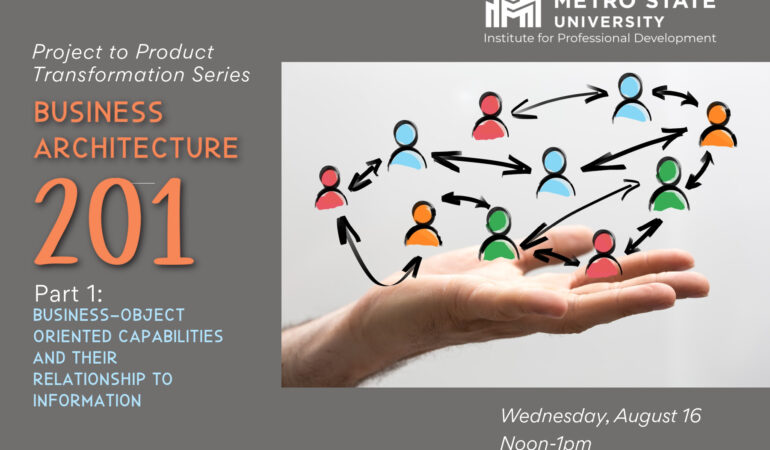
Business Architecture 201: Part 1 – Business-Object Oriented Capabilities and their Relationship to Information | Past Expert Insights Webinar

Business Architecture 201: Session 1

Watch Video Here

This session will focus on business capabilities and their role and position in the larger business architecture framework.  It will explain how capabilities can be used as building blocks to achieve the outcomes an organization strives to define and execute and demonstrate how capabilities use and modify information with an example drawn from ongoing work to transform Minnesota’s human service delivery systems.

About the Series:

This series will explore the core business architecture domains that DHS is leveraging to integrate service delivery and develop an enterprise portfolio of products.   The series will be especially helpful to the public sector and others whose product is a service, rather than a tangible item for purchase.

Watch Video Here


As the name 201 suggests, those with some background in business architecture or enterprise architecture may find the series more informative.

Watch Video Here


ABOUT THE PRESENTER:

Katherine (Kit) Shelton from the Department of Human Services (DHS) for the State of Minnesota is applying business architecture to help DHS transform service delivery by coordinating distributed work to integrate services and transition to a product operating model. She and two other Enterprise Business Architects in the Agency Effectiveness Administration lead a cross-functional team of business experts from all over the department to apply shared principles and common standards across business units to integrate multiple perspectives into a single enterprise-wide business framework.
Read More